Cart summary

You have no items in your shopping cart.

Pdcd4 phospho S457 Antibody

SKU: orb345559

Description

Pdcd4 (phospho-S457) antibody

Images & Validation

Tested ApplicationsELISA, IHC, WB
Dilution rangeELISA: 1:400,000, IHC: 21.25 - 2.5 µg/ml, WB: 1:500 - 1:2,000
ReactivityHuman
Application Notes
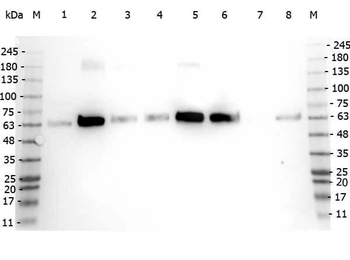
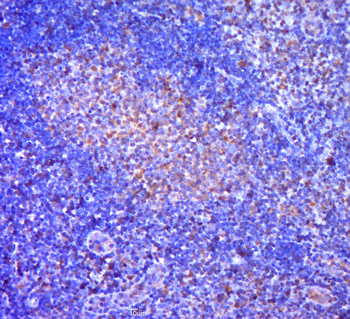
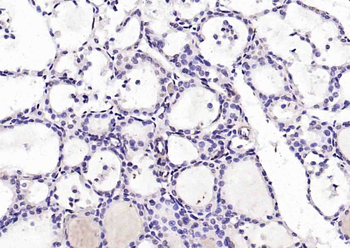
This affinity purified antibody has been tested for use in ELISA, immunohistochemistry, and western blotting. Specific conditions for reactivity should be optimized by the end user. By western blot, a band approximately 52 kDa in size corresponding to Pdcd4 protein is expected in the appropriate cell lysate or extract.

Key Properties

Antibody TypePrimary Antibody
HostRabbit
ClonalityPolyclonal
IsotypeIgG
ImmunogenThis affinity purified antibody was prepared from whole rabbit serum produced by repeated immunizations with a synthetic peptide corresponding to amino acids surrounding Ser457 in the human Pdcd4 protein.
PurityThis product was affinity purified from monospecific antiserum by immunoaffinity chromatography using phospho-peptide coupled to agarose beads followed by solid phase adsorption against nonphospho-peptide. This antibody is specific for human Pdcd4 protein phosphorylated at Ser457. A BLAST analysis was used to suggest cross-reactivity with Pdcd4 from human, mouse, rat and Xenopus based on 100% homology with the immunizing sequence. Cross-reactivity with Pdcd4 from other sources has not been determined.
ConjugationUnconjugated

Storage & Handling

StorageStore vial at -20° C prior to opening. Aliquot contents and freeze at -20° C or below for extended storage. Avoid cycles of freezing and thawing. Centrifuge product if not completely clear after standing at room temperature. This product is stable for several weeks at 4° C as an undiluted liquid. Dilute only prior to immediate use.
Form/AppearanceLiquid (sterile filtered)
Buffer/Preservatives0.01% (w/v) Sodium Azide
Concentration1.0 mg/mL
Dry Ice ShippingPlease note: This product requires shipment on dry ice. A dry ice surcharge will apply.
DisclaimerFor research use only

Alternative Names

rabbit anti-PDCD4 pS457 antibody, PDCD-4, PDCD 4, Programmed cell death protein 4, Death up-regulated gene protein antibody, Dug antibody, H731 antibody, Ma3 antibody, Neoplastic transformation inhibitor antibody, Neoplastic transformation inhibitor protein antibody, Nuclear antigen H731 antibody, Protein 197/15a

Similar Products

  • Pdcd4 phospho S457 Antibody [orb345560]

    ELISA,  IHC,  WB

    Human

    Rabbit

    Polyclonal

    Unconjugated

    25 μl
  • Phospho-PDCD4 (Ser457) Rabbit Polyclonal Antibody [orb312713]

    ICC,  WB

    Equine, Gallus, Porcine, Rabbit, Rat, Sheep, Zebrafish

    Human, Mouse

    Rabbit

    Polyclonal

    Unconjugated

    100 μl, 50 μl, 200 μl
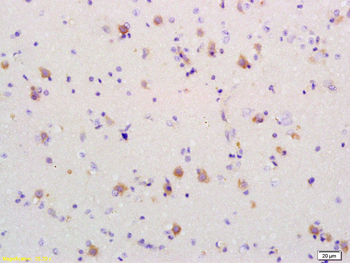
  • PDCD4 (Phospho-S457) Antibody [orb256744]

    IHC,  WB

    Bovine, Gallus, Human, Mouse, Rat

    Rabbit

    Polyclonal

    Unconjugated

    200 μl, 100 μl, 30 μl, 50 μl
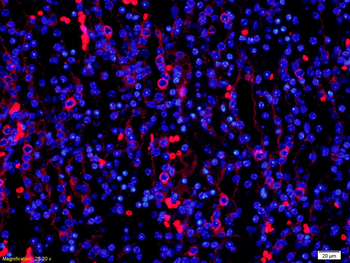
  • Pdcd4 phospho S457 Antibody [orb344433]

    ELISA,  IHC,  WB

    Human, Mouse

    Mouse

    Monoclonal

    Unconjugated

    100 μg
  • Pdcd4 phospho S457 Antibody [orb344434]

    ELISA,  IHC,  WB

    Human, Mouse

    Mouse

    Monoclonal

    Unconjugated

    25 μl
Quality Guarantee

Quality Guarantee

Explore bioreagents carefree to elevate your research. All our products are rigorously tested for performance. If a product does not perform as described on its datasheet, our scientific support team will provide expert troubleshooting, a prompt replacement, or a refund. For full details, please see our Terms & Conditions and Buying Guide. Contact us at [email protected].
Pdcd4 phospho S457 Antibody

Immunohistochemical analysis of PDCD4 shows the corresponding H&E-stained and PDCD4-stained tissue sections from patients with OSCC. Panels A1, A2, D1, D2 show two adjacent normal epithelium samples with strongly positive, nuclear PDCD4 staining. Panels B1, B2, E1, E2 show two dysplasia samples with positive to weak nuclear PDCD4 staining. Panels C1, C2, F1, F2 show loss of PDCD4 expression in two moderately differentiated OSCCs. Normal, dysplasia and OSCC samples are paired and correspond to two different patients (A-C and D-F, respectively).

Pdcd4 phospho S457 Antibody

Immunohistochemical analysis of PDCD4 shows the corresponding H&E-stained and PDCD4-stained tissue sections from patients with OSCC. Panels A1, A2, D1, D2 show two adjacent normal epithelium samples with strongly positive, nuclear PDCD4 staining. Panels B1, B2, E1, E2 show two dysplasia samples with positive to weak nuclear PDCD4 staining. Panels C1, C2, F1, F2 show loss of PDCD4 expression in two moderately differentiated OSCCs. Normal, dysplasia and OSCC samples are paired and correspond to two different patients (A-C and D-F, respectively).

Pdcd4 phospho S457 Antibody

Immunohistochemical analysis of PDCD4 shows the corresponding H&E-stained and PDCD4-stained tissue sections from patients with OSCC. Panels A1, A2, D1, D2 show two adjacent normal epithelium samples with strongly positive, nuclear PDCD4 staining. Panels B1, B2, E1, E2 show two dysplasia samples with positive to weak nuclear PDCD4 staining. Panels C1, C2, F1, F2 show loss of PDCD4 expression in two moderately differentiated OSCCs. Normal, dysplasia and OSCC samples are paired and correspond to two different patients (A-C and D-F, respectively).

Pdcd4 phospho S457 Antibody

Immunohistochemical analysis of PDCD4 shows the corresponding H&E-stained and PDCD4-stained tissue sections from patients with OSCC. Panels A1, A2, D1, D2 show two adjacent normal epithelium samples with strongly positive, nuclear PDCD4 staining. Panels B1, B2, E1, E2 show two dysplasia samples with positive to weak nuclear PDCD4 staining. Panels C1, C2, F1, F2 show loss of PDCD4 expression in two moderately differentiated OSCCs. Normal, dysplasia and OSCC samples are paired and correspond to two different patients (A-C and D-F, respectively).

Pdcd4 phospho S457 Antibody

Immunohistochemical analysis of PDCD4 shows the corresponding H&E-stained and PDCD4-stained tissue sections from patients with OSCC. Panels A1, A2, D1, D2 show two adjacent normal epithelium samples with strongly positive, nuclear PDCD4 staining. Panels B1, B2, E1, E2 show two dysplasia samples with positive to weak nuclear PDCD4 staining. Panels C1, C2, F1, F2 show loss of PDCD4 expression in two moderately differentiated OSCCs. Normal, dysplasia and OSCC samples are paired and correspond to two different patients (A-C and D-F, respectively).

Pdcd4 phospho S457 Antibody

Immunohistochemical analysis of PDCD4 shows the corresponding H&E-stained and PDCD4-stained tissue sections from patients with OSCC. Panels A1, A2, D1, D2 show two adjacent normal epithelium samples with strongly positive, nuclear PDCD4 staining. Panels B1, B2, E1, E2 show two dysplasia samples with positive to weak nuclear PDCD4 staining. Panels C1, C2, F1, F2 show loss of PDCD4 expression in two moderately differentiated OSCCs. Normal, dysplasia and OSCC samples are paired and correspond to two different patients (A-C and D-F, respectively).

Pdcd4 phospho S457 Antibody

Panel A shows miR-21 expression in pre-miR-21 or anti-miR-21 transfected cells compared to control (miR-scramble) in the UT-SCC cell lines 24A, 74A, and 87. Panel B shows PDCD4 protein levels (Western blot) after transfection with pre-miR-21 or anti-miR-21 compared to miR-scramble control. PCR data plotted are the mean ± SE and are representative of 3 separate experiments. In the Western blot, PDCD4/β-Actin represents the ratio of the band intensity of PDCD4 compared to that of β-Actin, and are shown below the blots, for each cell line. Panels A-C in the same line corresponds to the same cell line, in this order (UT-SCC-24A, 74A and 87).

Pdcd4 phospho S457 Antibody

PDCD4 mRNA and PDCD4 protein levels in OSCC cell lines. (A) The log10 ratio of PDCD4 mRNA in OSCC cell lines relative to HOK. (B) Quantification of PDCD4 protein expression in OSCC cell lines with a representative Western blot of PDCD4 protein in OSCC cell lines below. Cell line data are plotted mean ± SE and are representative of 3 separate experiments.

Pdcd4 phospho S457 Antibody

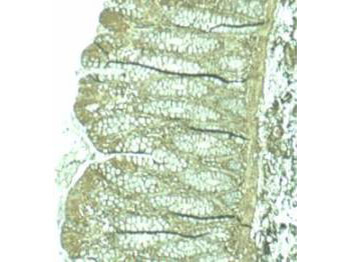
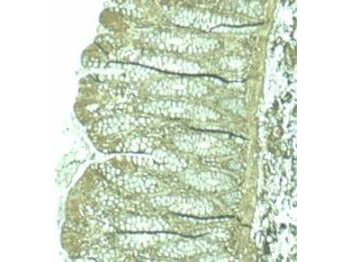
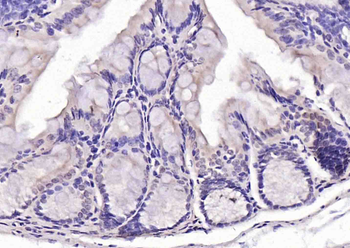
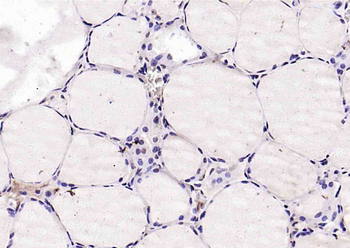
Biorbyt's affinity purified anti-Pdcd4 pS457 antibody was used at 1.25 µg/ml to detect signal in a variety of tissues including multi-human, multi-brain and multi-cancer slides. This image shows moderate positive staining of human breast epithelial cells at 40X. Tissue was formalin-fixed and paraffin embedded. The image shows localization of the antibody as the precipitated red signal, with a hematoxylin purple nuclear counterstain.

Pdcd4 phospho S457 Antibody

The upper panel shows miR-21 expression levels following transfection with pre-miR21, PDCD4 and PDCD4-UTRmut, compared to controls: scramble miR and PCMV6 empty vector. miR-21 expression data are presented as Log10 fold change, compared to mock-transfected control. Data are plotted as mean ± SE and are representative of two separate experiments. The lower panel shows the Western blot analysis of PDCD4 protein levels for the different transfection conditions. PDCD4/β-Actin represents the ratio of the band intensity of PDCD4 compared to that of β-Actin, and is shown below each blot. Co-transfection of miR-21 with PDCD4, but not PDCD4-UTRmut, resulted in a decrease in PDCD4 protein expression.

Pdcd4 phospho S457 Antibody

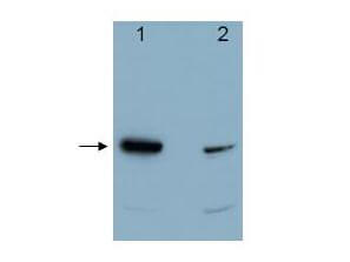
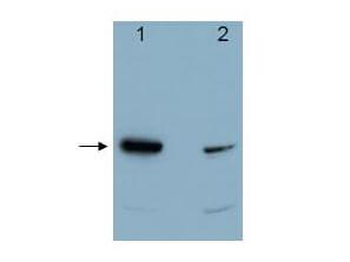
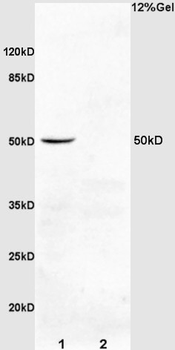
Western blot using Biorbyt's affinity purified anti-Pdcd4 pS457 antibody shows detection of Pdcd4 phosphorylated at Ser 457 (lanes 1 & 3) at ~52kDa (arrow). Lanes 1 & 2 each contain 100 ng recombinant Pdcd4. Lanes 3 & 4 each contain 30 µg of whole cell extract from 293 HEK cells treated with 20 nM TPA and MG132 proteosome inhibitor for 8 hours. The signal can be competed off with peptide phosphorylated at Ser 457 (Lanes 2 & 4).

Pdcd4 phospho S457 Antibody

Western blotting analysis demonstrating over-expression or knock-down of PDCD4 using PDCD4 plasmid or PDCD4 targeted siRNA, respectively, versus control plasmids (PCMV6, siRNA ctrl) in the UT-SCC cell lines (A) 24A, (B) 74A, and (C) 87.

Pdcd4 phospho S457 Antibody

Western blotting analysis demonstrating over-expression or knock-down of PDCD4 using PDCD4 plasmid or PDCD4 targeted siRNA, respectively, versus control plasmids (PCMV6, siRNA ctrl) in the UT-SCC cell lines (A) 24A, (B) 74A, and (C) 87.

Pdcd4 phospho S457 Antibody

Western blotting analysis demonstrating over-expression or knock-down of PDCD4 using PDCD4 plasmid or PDCD4 targeted siRNA, respectively, versus control plasmids (PCMV6, siRNA ctrl) in the UT-SCC cell lines (A) 24A, (B) 74A, and (C) 87.

UniProt Details

No UniProt data available

NCBI Reference Sequences

Associated Accession Numbers
Curated reference sequences for the gene transcript and protein product
RefSeq21735596

Documents Download

Datasheet
Product Information
Download

Request a Document

Protocol Information

WB
Western Blot (IB, immunoblot)
View Protocol
IHC
Immunohistochemistry
View Protocol
ELISA
Enzyme-linked Immunosorbent Assay (EIA)
View Protocol

Pdcd4 phospho S457 Antibody (orb345559)

  • Star
  • Star
  • Star
  • Star
  • Star
  • 0.0
Based on 0 reviews

Participating in our Biorbyt product reviews program enables you to support fellow scientists by sharing your firsthand experience with our products.

Login to Submit a Review

No reviews yet