
You have no items in your shopping cart.
Welcome to Biorbyt's Tips and Tricks benchtop guide—a dedicated technical resource created to help you streamline daily laboratory workflows, troubleshoot experimental bottlenecks, and optimize assay protocols. From choosing the right monoclonal or polyclonal antibody to reducing Western blot background noise and mastering flow cytometry panel design, our scientific support team provides practical, data-driven recommendations to ensure your experiments remain reliable and reproducible.
Featured Benchtop Guides
Clone Comparison

Read Clone Guide >
Methodology Guide

Compare Tech >
.png)
Compare ELISA Kits >
Read Validation Guide >

Learn About Controls >
View Solubility Guide >

Optimize ELISAs >

Learn ELISA Basics >

Optimize Cytometry >
.png)
Select Antibodies >
Optimize IF Stains >

Optimize IHC >
Explore Matched Pairs >
View MBD Pairs >

Explore Modifications >
Learn About mAbs >
Compare mAbs & pAbs >
Explore Rat mAbs >
Explore Recombinants >

Review Applications >

Select Secondaries >
Optimize Western Blots >
Cancer
Read More >
Comparison of Anti-Human CD38 Clones HB7 vs. HIT2
CD38 is a type II transmembrane protein that plays multiple roles in the immune system. Discover the functional differences, epitope specificities, and optimal assay applications for anti-human CD38 monoclonal clones HB7 and HIT2.
The Difference Between FACS and Flow Cytometry
Flow cytometry and FACS (Fluorescence-Activated Cell Sorting) are essential tools in cell biology. Learn the core operational distinctions between analytical cell profiling and sorting instrumentation to select the right platform for your experiment.
Traditional vs. Quick ELISA Kits
Compare standard multi-step ELISA protocols against rapid single-wash sandwich ELISA formats to balance sensitivity, sample volume requirements, and bench time.
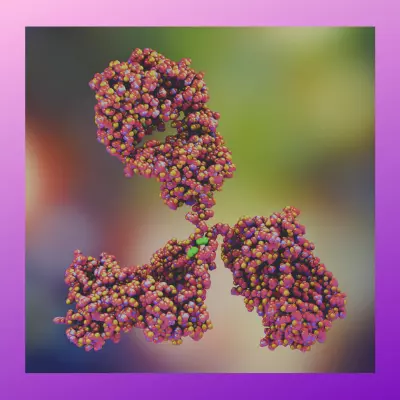
Antibody Validation
Learn how antibodies are raised against peptide sequences or recombinant proteins and explore the experimental controls required to verify target specificity.
Blocking Peptides
Understand how blocking peptides are used as negative controls to confirm antibody specificity in Western blot and immunohistochemistry assays.
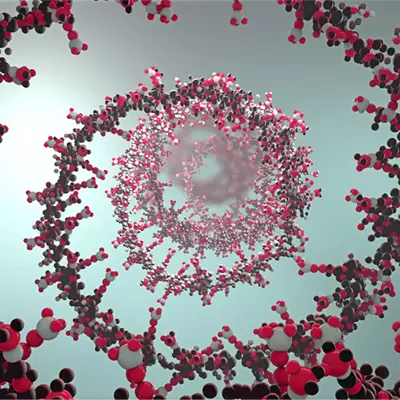
Dissolving Peptides
Overcome low peptide solubility with step-by-step solvent selection guidelines based on amino acid charge, hydrophobicity, and sequence length.
ELISA Tips and Tricks
Troubleshoot common immunoassay issues including high background signals, poor standard curve linearity, edge effects, and low optical density readings.
ELISA Kits: The Basics
Review the fundamental principles of enzyme-linked immunosorbent assays, including direct, indirect, sandwich, and competitive assay architectures.
Flow Cytometry Tips
Master cell preparation, Fc receptor blocking, viability dye selection, and gating strategies to prevent artifacts in flow cytometry and FACS experiments.
Choosing Antibodies for Flow Cytometry
Select compatible fluorophore conjugates and optimize multicolor panels based on instrument laser configurations and antigen expression density.
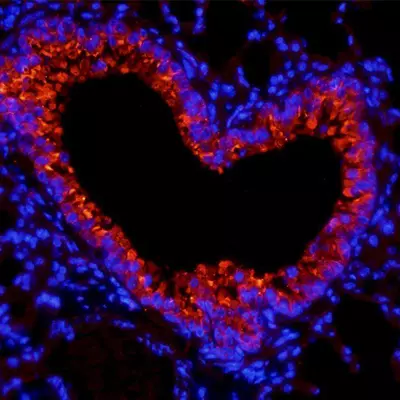
IF Staining Tips
Improve immunofluorescence signal-to-noise ratios with best practices for sample fixation, permeabilization, autofluorescence quenching, and mounting.
IHC Tips and Tricks
Explore heat-induced and enzymatic antigen retrieval techniques, tissue sectioning tips, and blocking steps for immunohistochemistry workflows.
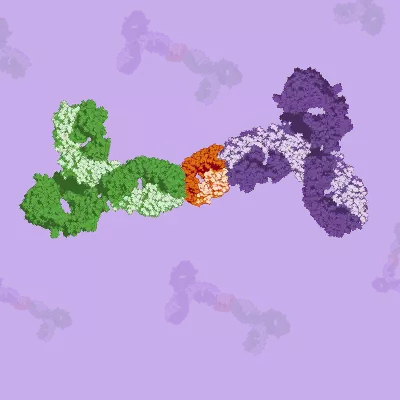
Matched Antibody Pairs
Discover how capture and detection antibody pairs are screened for non-overlapping epitopes to build sensitive sandwich ELISA and lateral flow assays.
MBD Matched Pairs
Access validated matched pair antibody sets designed for infectious disease surveillance and detecting mosquito-borne pathogens like Malaria, Dengue, and Zika.
Modified Antibodies
Learn how enzymatic cleavage and biochemical modifications create Fab fragments, Fc-silent constructs, and engineered conjugates for specialized assays.
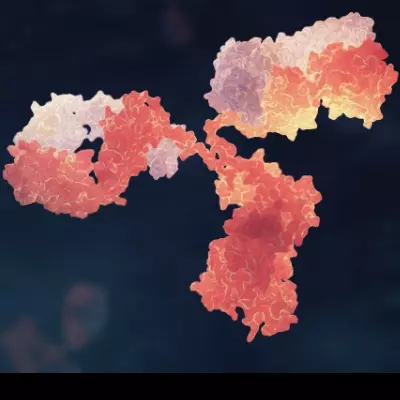
Monoclonal Antibodies
Understand hybridoma generation, epitope specificity, and the advantages of monoclonal antibodies for long-term experimental reproducibility.
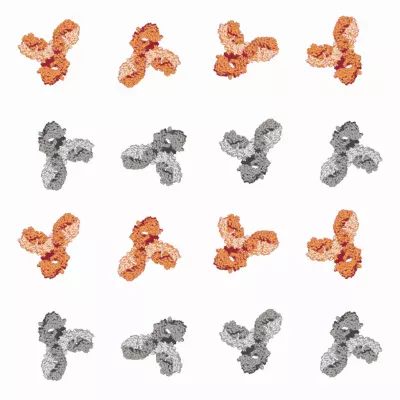
mAb vs. pAb
Compare monoclonal and polyclonal antibodies across sensitivity, epitope recognition, cross-reactivity, and application suitability to choose the right reagent.
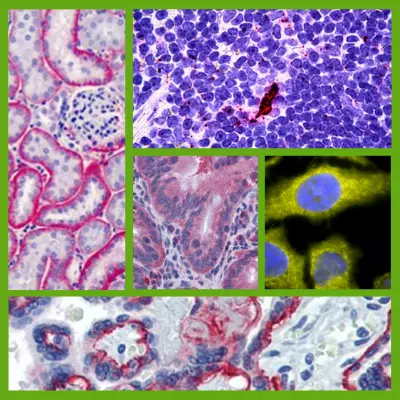
Rat Monoclonals
Explore the unique benefits of rat monoclonal antibodies for probing mouse tissue models without anti-mouse secondary antibody background interference.
Recombinant Antibodies
Discover how sequence-defined recombinant antibodies eliminate genetic drift and lot-to-lot variability while supporting animal-free research initiatives.
Research Applications
Evaluate how sample preparation, fixation methods, and buffer compositions influence antibody binding performance across different experimental platforms.
Choosing Secondaries
Navigate host species selection, cross-adsorption profiles, isotype specificity, and reporter enzyme/fluorophore conjugates for secondary antibodies.
Western Blot Tips and Tricks
Resolve Western blotting challenges including weak bands, smiling gels, high background staining, and non-specific binding with optimized transfer and blocking tips.
Spatial Biology and IHC: Why Immunohistochemistry Still Matters in Biomarker Validation
Discover why immunohistochemistry remains a cornerstone technique for biomarker validation within the context of spatial biology and cancer research.