
You have no items in your shopping cart.
Amivantamab Antibody (Research Grade)
Recombinant Anti-EGFR x c-Met Bispecific Biosimilar Monoclonal Antibody for Laboratory-Scale Preclinical Research and Assay Development.
Technical Summary
Biorbyt's research-grade Amivantamab recombinant antibody (SKU: orb2977888) is a purified asymmetric bispecific monoclonal antibody designed for investigator-led preclinical evaluation. This antibody targeting extracellular receptors mimics the physiological binding specificities of clinical-grade alternatives, enabling reproducible cellular profiling and binding assays.
- Dual Target Specificity: Binds human EGFR (HER1) and c-Met (HGFR) simultaneously.
- Verified Reactivity: Calibrated and tested for tracking human target receptor variants.
- Structural Grade: Research-grade biosimilar format optimised for non-clinical profiling.
- Flexible Sizing Options: Available in variable analytical scales to support diverse pilot campaigns.
1. Target Overview: Dual EGFR/c-Met Bispecific Inhibition
The molecular cross-talk between the epidermal growth factor receptor (EGFR/HER1/ERBB1) and the hepatocyte growth factor receptor (c-Met/HGFR) represents a primary pathway of interest in oncology and cell proliferation research. In many model systems, co-activation of these two transmembrane tyrosine kinase receptors drives downstream mitogenic cascades, notably the mitogen-activated protein kinase (MAPK/ERK) and phosphoinositide 3-kinase (PI3K/AKT) signalling systems.
Targeting a single pathway often prompts compensatory upregulation of the alternative receptor within complex cellular tumour microenvironments. Utilising an anti-EGFR c-Met bispecific antibody architecture allows researchers to examine the simultaneous dual-targeting kinetics and down-regulation profiles of both target structures instead of deploying isolated single-target monoclonal antibody treatments.
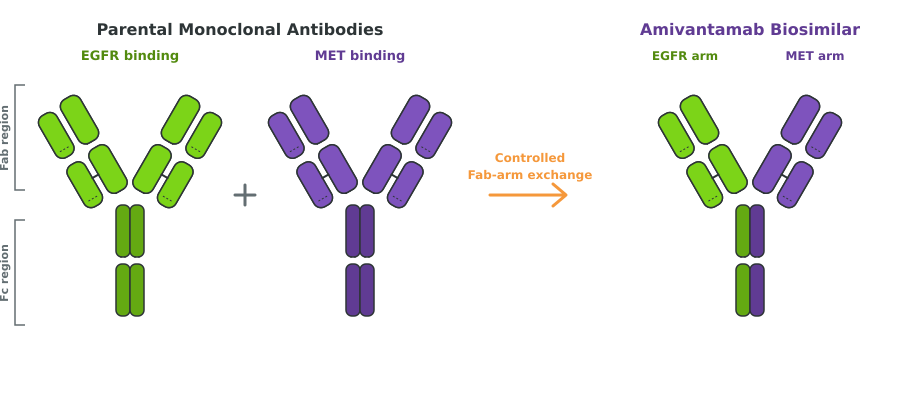
Biosimilar Specification: Research-grade Amivantamab is an asymmetric, bispecific monoclonal antibody biosimilar. It addresses independent extracellular epitopes on human EGFR and c-Met molecules, offering an established tool for assessing dual-receptor blockade in vitro.
2. Molecular Mechanism of Action
Biorbyt’s research grade Amivantamab antibody operates through specific direct interactions at the extracellular boundary. By interacting concurrently with human EGFR and c-Met surface domains, it physically interrupts regular ligand attachment events—interfering with endogenous epidermal growth factor (EGF) and hepatocyte growth factor (HGF) binding configurations. This dual interaction can be deployed in cell culture research to analyse variations in downstream phosphorylation tracking and alterations in receptor localisation across cell membranes using specialised signalling antibodies.
3. Research Applications & Validation Data
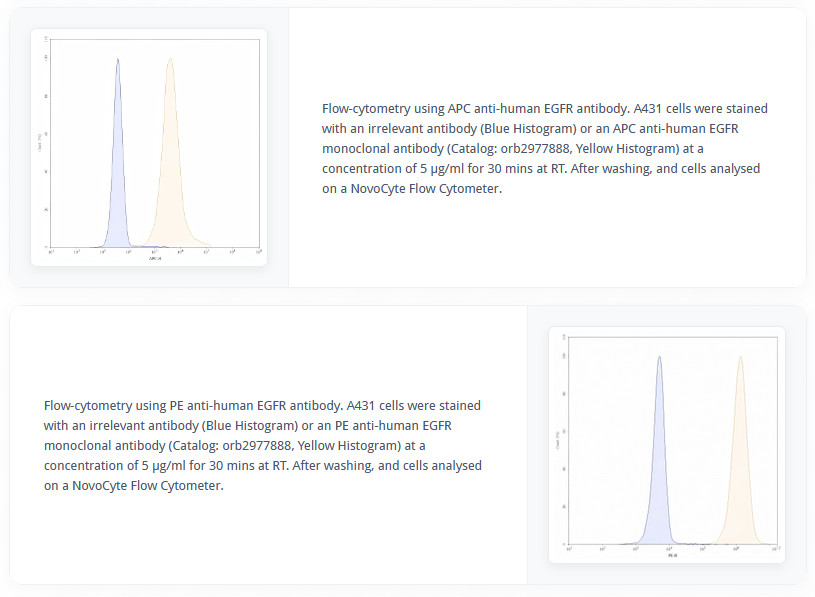
- Flow Cytometry (FACS Analysis): Validated for monitoring antigen binding and presence configurations across target-positive cellular selections using high-purity fluorescent secondary antibodies, as verified by multi-panel validation histograms.
- Indirect ELISA Systems: Suitable for multi-well plate loading to measure binding curve characteristics against isolated target proteins using standard developmental ELISA kits and reagents.
- Functional Signalling Assessment: Applicable for measuring relative changes in target phosphorylation following long-term treatment incubation loops.
4. Analytical Specifications
To ensure analytical accountability, every production lot is assigned distinct technical parameters to guide baseline laboratory preparation:
Specification Parameter | Analytical Values & Product Attributes |
|---|---|
Catalogue SKU Identification | |
Antibody Target Format | Biosimilar Monoclonal Bispecific IgG1 (Anti-Human EGFR x c-Met) |
Alternative Identifiers | JNJ-61186372, Rybrevant Equivalent, Anti-HER1/HGFR |
Standard Storage Formulation | Supplied in standard Phosphate Buffered Saline (PBS) configuration |
Concentration / Purity Status | Batch-Specific (Refer precisely to your provided Certificate of Analysis) |
Storage Conditions | Store at 2–8°C for short-term use; aliquot and store at -20°C to -80°C for long-term storage |
Need the batch-specific parameters or certificate values?
View documentation for a batch.
6. Frequently Asked Questions (FAQs)
What is the distinction between research-grade Amivantamab and therapeutic Rybrevant?
Biorbyt’s research-grade biosimilar (SKU: orb2977888) is manufactured exclusively to support laboratory scale in vitro assay testing and biochemical profiling. It is not produced under human therapeutic cGMP regulations and is strictly prohibited from clinical use, administration, or human diagnostic applications.
Which applications have been visually verified for this specific catalogue item?
This antibody features confirmed data profiles for flow cytometry validation (FACS), as shown in our product histogram documentation. Users are advised to calibrate concentration variables across alternative techniques such as ELISA or direct binding configurations depending on target tissue abundance.
How should I handle and store the antibody upon arrival?
The product should be centrifuged briefly before opening to collect the solution at the bottom of the vial. For immediate use, store the reagent at 2–8°C. For extended storage, prepare single-use aliquots and store at -20°C or -80°C to avoid repeated freeze-thaw cycles.
5. Companion Bioreagents & Workflow Tools
To assist with multi-staining assays and assay design setups, Biorbyt supplies a range of companion materials cross-calibrated for related workflow steps:
Secondary Conjugate Goat Anti-Human IgG (FITC) Cross-adsorbed secondary tracking agent, optimised for target visualisation alongside human monoclonal systems. Quantification Kit Human EGFR ELISA Kit Sandwich assay format built to calculate total soluble or cell-extract EGFR values under controlled conditions. Validation Control Anti-c-Met Monoclonal Antibody Independent tracking clone targeting alternative intracellular epitopes of c-Met for direct control verification.
Institutional Bulk Procurement & Volume Quoting
Running large-scale screening campaigns that require consistent supply? Biorbyt offers custom volume pricing and single-lot reservation options across our biosimilar antibody collection.
7. Scientific Bibliography
- Keunchil Park et al. (2020). Amivantamab (JNJ-61186372), an anti-EGFR-MET bispecific antibody, in patients with EGFR exon 20 insertion (exon20ins)-mutated non-small cell lung cancer (NSCLC). JCO.2020.38.15_suppl.9512
- Nagasaka, M., Balmanoukian, A. S., Madison, R., et al. (2021). Amivantamab (JNJ-61186372) induces clinical, biochemical, molecular, and radiographic response in a treatment-refractory NSCLC patient harbouring amplified triple EGFR mutations (L858R/T790M/G796S) in cis. Lung Cancer, 164, 22-31. LungCan.S0169-5002(21)00662-0
- Neijssen, J., Cardoso, R., et al. (2021). Discovery of amivantamab (JNJ-61186372), a bispecific antibody targeting EGFR and MET. Journal of Biological Chemistry, 296, 100641. JBC.S0021-9258(21)00427-0
- Vijayaraghavan, S., Lipfert, L., Chevalier, K. M., et al. (2020). Amivantamab (JNJ-61186372), an Fc Enhanced EGFR/cMet Bispecific Antibody, Induces Receptor Downmodulation and Antitumour Activity by Monocyte/Macrophage Trogocytosis. Molecular Cancer Therapeutics, 19(10), 2044–2056. MCT.19/10/2044