Cart summary

You have no items in your shopping cart.

Sulforaphane

SKU: orb1296132

Description

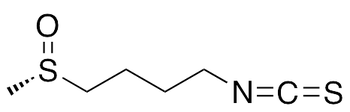
Sulforaphane is a bioactive isothiocyanate that functions as an Nrf2 activator and AMPK signaling inhibitor. Its antitumor and anti-inflammatory properties, mediated through the upregulation of tumor suppressors and HDAC inhibition, make it a valuable tool for research in oncology and inflammation using both cellular and animal models.

Research Area

Cell Biology, Epigenetics & Chromatin, Immunology & Inflammation, Metabolism Research, Molecular Biology, Protein Biochemistry, Signal Transduction

Images & Validation

Key Properties

CAS Number4478-93-7
MW177.29
Purity99.79%
FormulaC6H11NOS2
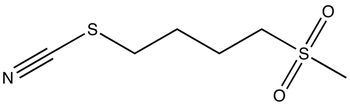
SMILESC(CCN=C=S)CS(C)=O
TargetHDAC,ROS,Bcl-2 Family,Reactive Oxygen Species,Apoptosis,Caspase,Nrf2
SolubilityDMSO: 252.5 mg/mL (1424.22 mM), Sonication is recommended.

Bioactivity

Target IC50
VSMCs proliferation:0.8 μM|95C cells proliferation:9.04 ± 1.90 μM|95D cells proliferation:17.35 ± 2.03 μM|H1299 cells proliferation:9.52 ± 1.23 μM
In Vivo
METHODS: To test the anti-inflammatory activity, a single dose of Sulforaphane (50 mg/kg) was administered intraperitoneally to BALB/c mice. Three days later, LPS was injected to induce acute lung injury (ALI). RESULTS: Sulforaphane significantly reduced LDH activity, lung wet-to-dry ratio, serum IL-6 and TNF-α levels, and NF-κB protein expression in mice with LPS-induced acute lung injury.Sulforaphane exerted its protective effect on LPS-induced ALI through the Nrf2/ARE pathway.
In Vitro
METHODS: Human colorectal cancer cells HT29 were treated with Sulforaphane (15 µM) for 24-96 h. Cell viability was measured by MTT assay. RESULTS: Sulforaphane at 15 µM was able to inhibit cell growth and induce cell death. 75% of the cells were already dead at 24 h, and almost all of them were dead at 96 h. METHODS: Gastric cancer cells BGC-823 and MGC-803 were treated with Sulforaphane (5-10 µM) for 48 h. The expression levels of target proteins were measured by Western Blot. RESULTS: When gastric cancer cells were treated with Sulforaphane, the expression levels of cell cycle regulatory proteins such as p53 and p21 were increased in a dose-dependent manner, whereas the expression level of S-phase related protein CDK2 was significantly decreased.
Cell Research
HT29 cells are seeded at low density (5×10^4 cells/mL) in 35- or 120-mm diameter Primaria dishes in standard medium containing 5% FCS. One day after seeding, the medium is changed, and HT29 cells are treated with sulforaphane (0-30 μM). An equivalent amount of the solvent (ethanol) is added to control cells (0.2% final concentration). The drug effect on cellular viability is evaluated using the MTT assay .
Animal Research
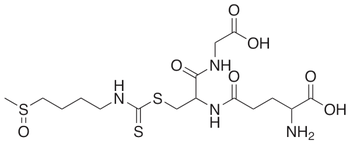
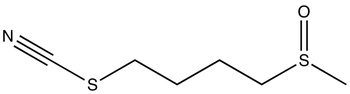
At age 47, 48, 49, 50, and 51 days, each animal receives by gavage either 0.5 mL of Emulphor EL-620 alone or the specified doses (75, 100, or 150 μM daily) of sulforaphane or compound 2, 3, or 4 in 0.5 mL of Emulphor EL-620. On day 50, 3 hr after administration of the vehicle or protector, all rats also receive an intragastric instillation of 8.0 mg of DMBA dissolved in 1.0 mL of sesame oil. This dose of DMBA is selected to produce a substantial tumor incidence, but not one so high as to overwhelm a potential chemoprotective effect. The animals are examined once weekly for the appearance and location of palpable tumors. At age 202 days, i.e., 152 days after carcinogen administration, all animals are euthanized with ether and weighed. The tumors are separated from the fat and connective tissue by dissection weighed and fixed in buffered 10% formalin. All tumors are identified microscopically by examination of stained sections .

Storage & Handling

Storagekeep away from direct sunlight,keep away from moisture,store at low temperature | Powder: -20°C for 3 years | Shipping with blue ice/Shipping at ambient temperature.
Expiration Date12 months from date of receipt.
DisclaimerFor research use only

Alternative Names

Apoptosis, Keap1-Nrf2, inhibit, Inhibitor, Histone deacetylases, HDAC, Sulforaphane

Similar Products

Quality Guarantee

Quality Guarantee

Explore bioreagents carefree to elevate your research. All our products are rigorously tested for performance. If a product does not perform as described on its datasheet, our scientific support team will provide expert troubleshooting, a prompt replacement, or a refund. For full details, please see our Terms & Conditions and Buying Guide. Contact us at [email protected].

Key Properties

No computed properties available.

Documents Download

Datasheet
Product Information
Download

Request a Document

Protocol Information

Sulforaphane (orb1296132)

  • Star
  • Star
  • Star
  • Star
  • Star
  • 0.0
Based on 0 reviews

Participating in our Biorbyt product reviews program enables you to support fellow scientists by sharing your firsthand experience with our products.

Login to Submit a Review

No reviews yet

Step 1: Enter information below

(Recommended: An additional animal making an allowance for loss during the experiment)

Step 2: Enter the in vivo formulation

(This is only the calculator, not formulation. Please contact us first if there is no in vivo formulation at the solubility Section.)

% DMSO +
%+
% Tween 80 +
%

Available Sizes

Select a size below

5 mg
$ 70.00
10 mg
$ 90.00
25 mg
$ 150.00
50 mg
$ 240.00
100 mg
$ 330.00
500 mg
$ 760.00
DispatchUsually dispatched within 3-5 working days
Bulk Enquiry