
You have no items in your shopping cart.
Description
Research Area
Neuroscience
Images & Validation
−Item 1 of 1
| Tested Applications | ELISA, IHC, WB |
|---|---|
| Dilution Range | ELISA: 1:20,000 - 1:100,000, IHC: 1:1,000 - 1:5,000, WB: 1:2,000 - 1:10,000 |
| Reactivity | Guinea pig |
| Application Notes |
Key Properties
−| Antibody Type | Secondary Antibody |
|---|---|
| Host | Goat |
| Clonality | Polyclonal |
| Isotype | IgG |
| Immunogen | Guinea Pig IgG F(c) fragment |
| Purity | Anti-Guinea Pig IgG F(c) Antibody was prepared from monospecific antiserum by immunoaffinity chromatography using Guinea Pig IgG coupled to agarose beads followed by solid phase adsorption(s) to remove any unwanted reactivities. Assay by immunoelectrophoresis resulted in a single precipitin arc against anti-Goat Serum, Guinea Pig IgG, Guinea Pig IgG F(c) and Guinea Pig Serum. No reaction was observed against Guinea Pig IgG F(ab). |
| Conjugation | Unconjugated |
Storage & Handling
−| Storage | Store vial at 4° C prior to opening. This product is stable for several weeks at 4° C as an undiluted liquid. Dilute only prior to immediate use. For extended storage aliquot contents and freeze at -20° C or below. Avoid cycles of freezing and thawing. |
|---|---|
| Form/Appearance | Liquid (sterile filtered) |
| Buffer/Preservatives | Preservative: 0.01% (w/v) Sodium Azide. Stabilizer: None; Buffer: 0.02 M Potassium Phosphate, 0.15 M Sodium Chloride, pH 7.2 |
| Concentration | 2.0 mg/mL |
| Expiration Date | 12 months from date of receipt. |
| Disclaimer | For research use only |
Alternative Names
−Guinea Pig IgG F(c) Antibody, Goat-a-Guinea Pig F(c), Guinea Pig F(c) in Goat, Goat anti-guinea pig F(c) Secondary Antibody.
Similar Products
−
Sheep Guinea Pig IgG (Fc specific), conjugated with FITC Antibody [orb21566]
Guinea pig
Sheep
Polyclonal
FITC
1 mlSheep Guinea Pig IgG (Fc specific), conjugated with Biotin Antibody [orb21567]
Guinea pig
Sheep
Polyclonal
Biotin
1 mlGoat Guinea Pig IgM (Fc specific), conjugated with Biotin Antibody [orb21810]
Guinea pig
Goat
Polyclonal
Biotin
1 mlGoat Guinea Pig Serum proteins Antibody [orb22054]
DOT, IEP
Guinea pig
Goat
Polyclonal
Unconjugated
1 ml

Quality Guarantee
Explore bioreagents carefree to elevate your research. All our products are rigorously tested for performance. If a product does not perform as described on its datasheet, our scientific support team will provide expert troubleshooting, a prompt replacement, or a refund. For full details, please see our Terms & Conditions and Buying Guide. Contact us at [email protected].
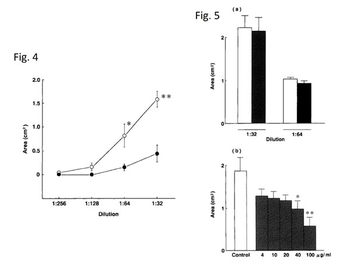
The 4-h and 7-d PCA reactions during the Challenges/Boosters of Pollen Instillation. On the 20th day after the 1st immunization, sera was obtained to estimate IgG and IgG antibody reactions using 4-h and 7-d PCAs, respectively. As shown in [Fig 4.], a significant effect was observed in 4-h PCA with a titer of 1:64 and 1:32 dilutions. Seven-day PCA was also elevated with a titer of 1:32 dilutions. The 4-h PCA reaction was not abolished with the heat (56°C, 4h) [Fig 5a], but the PCA reaction was significantly abolished by antibody absorbed with IgG-Fc antibody at concentrations of 40 and 100 µg/ml [Fig 5b]. Fig 4. PCA reaction induced by Anti-Cedar Pollen Antibody in Guinea Pigs. Each value shows mean ± SEM (n = 5). Unfilled circle = 4h, black filled circle = 7d. *, ** Significantly different from 7-d sensitized group at P < 0.01 and P < 0.05, respectively. Fig 5. PCA reaction induced by antibody treatment by heat and absorbing with IgG-Fc in Guinea Pigs. (a) Effect of incubation at 56°C for 4h. Each value shows mean ±SEM (n = 5). Unfilled bar = control, black filled bar = incubation at 56°C for 4h. (b) Effect of antibody absorbed with IgG-Fc. Each value shows mean ±SEM (n = 5). *, ** Significantly different from 7-d sensitized group at P < 0.01 and P < 0.05, respectively.
Documents Download
Datasheet
Product Information
Request a Document
Protocol Information
WB
Western Blot (IB, immunoblot)
IHC
Immunohistochemistry
ELISA
Enzyme-linked Immunosorbent Assay (EIA)
Guinea Pig IgG Fc Antibody (orb347058)

- 0.0
Based on 0 reviews
Participating in our Biorbyt product reviews program enables you to support fellow scientists by sharing your firsthand experience with our products.
Login to Submit a ReviewAvailable Sizes
Select a size below
Free Secondary Antibody (20 ul)0/0
Please add an antibody product to your cart first.
 Usually dispatched within 5-10 working days