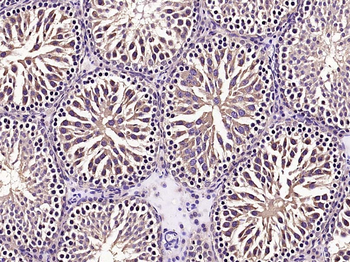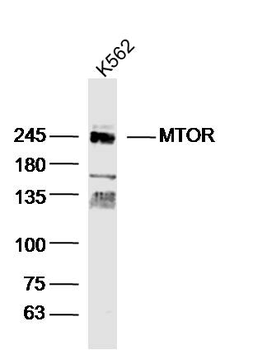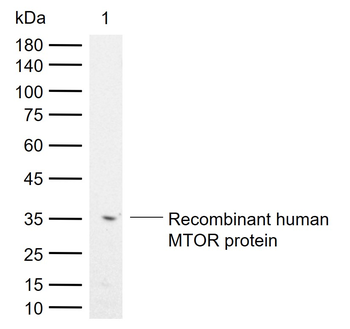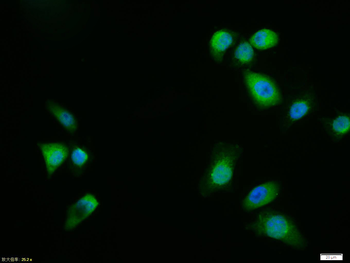
Cart summary

You have no items in your shopping cart.
Rapamycin

SKU: orb1308282

Description

Rapamycin is a natural macrolide and potent mTOR inhibitor, demonstrating high specificity with an IC50 of 0.1 nM in HEK293 cells. This compound is widely used in research for its immunosuppressive properties and ability to induce autophagy, applicable in both in vitro mechanistic studies and in vivo models of aging and disease.

Research Area

Cell Biology, Immunology & Inflammation, Infectious Disease & Virology, Metabolism Research, Signal Transduction

Images & Validation

Key Properties

CAS Number53123-88-9
MW914.17
Purity99.90% (May vary between batches)
FormulaC51H79NO13
SMILES[H][C@@]12CC[C@@H](C)[C@@](O)(O1)C(=O)C(=O)N1CCCC[C@@]1([H])C(=O)O[C@@]([H])(CC(=O)[C@H](C)\C=C(C)\[C@@H](O)[C@@H](OC)C(=O)[C@H](C)C[C@H](C)\C=C\C=C\C=C(C)\[C@H](C2)OC)[C@H](C)C[C@@H]1CC[C@@H](O)[C@@H](C1)OC
TargetEndogenous Metabolite,Autophagy,Antifungal,mTOR,Antibacterial,Antibiotic,FKBP
SolubilityH2O:Insoluble;Ethanol:100 mg/mL (109.39 mM);DMSO:257.5 mg/mL (281.68 mM);10% DMSO+40% PEG300+5% Tween 80+45% Saline:10 mg/mL (10.94 mM)

Bioactivity

Target IC50
MCF-7 cells:18.74 μM|MDA-MB-468 cells:37.2 μM|mTOR:0.1 nM (HEK293 cells)|A549 cells:18.74 μM|HeLa cells:> 10000 nM|MEF cells:0.05 nM|MDA-MB-231 cells:> 10000 nM|HEK293T cells:0.1 nM (EC50)|HEK293 cells:0.1 nM
In Vivo
METHODS: To study the effect of Rapamycin on life expectancy, Rapamycin (8 mg/kg in DMSO+5% PEG-400+5% Tween-80) was administered intraperitoneally to 20-21 month old C57BL/6J mice once daily for three months. RESULTS: Three months of Rapamycin treatment was sufficient to increase the life expectancy of middle-aged mice by 60% and improve their healthy lifespan. METHODS: To determine the appropriate dose of Rapamycin for the treatment of epilepsy, Rapamycin (0.1-3 mg/kg in 4% ethanol + 5% Tween 80 + 5% PEG 400) was injected intraperitoneally into Sprague-Dawley rats once a day for four weeks. RESULTS: Only 1.0 mg/kg and 3.0 mg/kg Rapamycin inhibited p-S6. Rats treated with 0.1 and 0.3 mg/kg Rapamycin had no significant adverse effects, whereas rats treated with 1.0 and 3.0 mg/kg Rapamycin showed significant reductions in body, spleen, and thymus weights, and exhibited cognitive impairment and anxiety. The Rapamycin dose could not inhibit mTOR in the treatment of epilepsy without causing any side effects, but 1 mg/kg may be the optimal dose to inhibit mTOR in young rats with relatively few side effects.
In Vitro
METHODS: Normal human renal epithelial cells HRECs were treated with Rapamycin (0.01-1000 nmol/L) for 6 days, and cell growth inhibition was detected using MTT. RESULTS: Rapamycin dose-dependently inhibited the growth of HRECs, with a 40% reduction in cell viability at a concentration of 10 nmol/L. METHODS: Human cervical cancer cells HeLa and human prostate cancer cells PC3 were treated with Rapamycin (100 nM) for 0.5-24 h, and the expression levels of target proteins were detected by Immunoprecipitation. RESULTS: Rapamycin had little effect on the expression levels of mTOR, raptor and rictor. Rapamycin significantly reduced raptor binding to mTOR at 0.5 h and rictor binding to mTOR at 24 h. Long-term treatment of cells with Rapamycin inhibited mTORC2 assembly. METHODS: Human vascular endothelial cells were treated with Rapamycin (1-100 ng/mL) for 48 h, and cell migration was examined using the Wound-healing method. RESULTS: Rapamycin dose-dependently inhibited the migration of human vascular endothelial cells.
Cell Research
To determine the effects of rapamycin and rapamycin plus LY294002 or UCN-01 on tumor cells, we determined cell viability after the treatments. We used a trypan blue dye exclusion assay as described previously. Tumor cells in exponential growth were harvested and seeded at 5 × 10^3 cells per well (0.1 mL) in 96-well flat-bottomed plates and incubated overnight at 37°C. The cells were then incubated for 72 hours with or without rapamycin or with rapamycin plus LY294002 or UCN-01. After the cells were collected by trypsinization, they were stained with trypan blue, and the viable cells in each well were counted. The viability of the untreated cells (the control) was considered 100%. Survival fractions were calculated from the mean cell viability of the treated cells .
Animal Research
Animals were randomized to treatment or vehicle groups so that the mean starting body weights of each group were equal. Drug treatment began on the day of surgery or on the first day of reloading after the 14-day suspension. Rapamycin was delivered once daily by intraperitoneal injection at a dose of 1.5 mg/kg, dissolved in 2% carboxymethylcellulose. CsA was delivered once daily by subcutaneous injection at a dose of 15 mg/kg, dissolved in 10% methanol and olive oil. FK506 was delivered once daily via subcutaneous injection at a dose of 3 mg kg 1, dissolved in 10% ethanol, 10% cremophor and saline .

Storage & Handling

Storagekeep away from moisture,store at low temperature | Powder: -20°C for 3 years | In solvent: -80°C for 1 year | Shipping with blue ice/Shipping at ambient temperature.
Expiration Date12 months from date of receipt.
DisclaimerFor research use only

Alternative Names

Autophagy, Bacterial, AY22989, AY-22989, AY 22989, Antibiotic, Inhibitor, HEK293, Mammalian target of Rapamycin, FK506-binding protein, FKBP, FKBP12, EndogenousMetabolite, Endogenous Metabolite, Fungal, mTOR, mTORC1, immunosuppressant, inhibit, NSC 2260804, NSC-2260804, NSC2260804, Rapamycin, Sirolimus

Similar Products

  • MTOR Rabbit Polyclonal Antibody [orb13590]

    FC,  ICC,  IF,  IHC-Fr,  IHC-P,  WB

    Bovine, Canine, Equine, Gallus, Goat, Rabbit, Sheep

    Human, Mouse, Rat

    Rabbit

    Polyclonal

    Unconjugated

    50 μl, 100 μl, 200 μl
  • Phospho-mTOR (Ser2481) Rabbit Polyclonal Antibody [orb6453]

    FC,  ICC,  IF,  IHC-Fr,  IHC-P,  WB

    Canine, Equine, Porcine, Rabbit, Sheep

    Human, Mouse, Rat

    Rabbit

    Polyclonal

    Unconjugated

    50 μl, 200 μl, 100 μl
  • Phospho-mTOR (Ser2448) Rabbit Polyclonal Antibody [orb6452]

    FC,  IF,  IHC-Fr,  IHC-P

    Bovine, Canine, Equine, Rabbit, Sheep

    Human, Mouse, Rat

    Rabbit

    Polyclonal

    Unconjugated

    100 μl, 50 μl, 200 μl
  • Raptor Rabbit Polyclonal Antibody [orb6836]

    IF,  IHC-Fr,  IHC-P

    Bovine, Equine, Gallus, Mouse, Porcine, Rat, Sheep

    Human

    Rabbit

    Polyclonal

    Unconjugated

    200 μl, 50 μl, 100 μl
  • mTOR Polyclonal Antibody [orb1412994]

    IF,  IHC-P,  WB

    Human, Mouse, Rat

    Rabbit

    Polyclonal

    Unconjugated

    100 μl
Quality Guarantee

Quality Guarantee

Explore bioreagents carefree to elevate your research. All our products are rigorously tested for performance. If a product does not perform as described on its datasheet, our scientific support team will provide expert troubleshooting, a prompt replacement, or a refund. For full details, please see our Terms & Conditions and Buying Guide. Contact us at [email protected].

Key Properties

No computed properties available.

Documents Download

Datasheet
Product Information
Download

Request a Document

Protocol Information

Rapamycin (orb1308282)

  • Star
  • Star
  • Star
  • Star
  • Star
  • 0.0
Based on 0 reviews

Participating in our Biorbyt product reviews program enables you to support fellow scientists by sharing your firsthand experience with our products.

Login to Submit a Review

No reviews yet

Step 1: Enter information below

(Recommended: An additional animal making an allowance for loss during the experiment)

Step 2: Enter the in vivo formulation

(This is only the calculator, not formulation. Please contact us first if there is no in vivo formulation at the solubility Section.)

% DMSO +
%+
% Tween 80 +
%

Available Sizes

Select a size below

10 mg
$ 180.00
50 mg
$ 340.00
DispatchUsually dispatched within 3-5 working days
Bulk Enquiry