Cart summary

You have no items in your shopping cart.

Vitamin D3

SKU: orb1224266

Description

Cholecalciferol is a naturally occuring form of vitamin D. Reported that upon metabolic activation, Cholecalciferol induces cell differentiation and prevents proliferation of Y cells.(In Vitro):Vitamin D3 is an inactive vitamin D molecule in vivo. Vitamin D3 undergoes two hydroxylation processes to activate it. Vitamin D3 is first hydroxylated in the liver to form the circulating prohormone 25-hydroxy vitamin D3 [25(OH)D3] by the enzyme 25-hydroxylase (CYP27A1) and probably also by other enzymes (e.g., CYP2R1).The second hydroxylation occurs in the kidneys via the enzyme 1-alpha-hydroxylase, yielding 1,25- dihydroxycholecalciferol (calcitriol), which is the biologically active form of vitamin D.Vitamin D3 (2-10 μM; 24-48 hours) exhibits anti-proliferative effects in a dose- and time- dependent manner. Maximal reduction of viability post treatment of 62% (IK), 52% (RL-95-2), and 55% (Hec-1A) occurrs by 72 h of treatment with 10 μM Vitamin D3. but 24-hour exposure lacks significant reduction in viable cells.Cholecalciferol (10 μM; 24-48 hours) shows marked increases in nuclear VDR staining and produces local VDR activation in IK cells.(In Vivo):Cholecalciferol (oral gavage; 5 mg/kg; 7 days) potentiates the CCl4 toxicity only in the liver, as indicated by plasma levels of ALT and AST, biochemical markers of hepatic damage. It significantly increases renal calcium levels in mice, but renal calcium content does not differ significantly between mice.

Images & Validation

Key Properties

CAS Number67-97-0
MW384.64
Purity>98% (HPLC)
FormulaC27H44O
SMILESC[C@H](CCCC(C)C)[C@H]1CC[C@@H]\2[C@@]1(CCC/C2=C\C=C/3\C[C@H](CCC3=C)O)C
TargetVD
Solubility10 mM in DMSO

Bioactivity

In Vivo
Cholecalciferol (oral gavage; 5 mg/kg; 7 days) potentiates the CCl4 toxicity only in the liver, as indicated by plasma levels of ALT and AST, biochemical markers of hepatic damage. It significantly increases renal calcium levels in mice, but renal calcium content does not differ significantly between mice. Animal model: Male ddY mice on CCl4 toxicity. Dosage: 5 mg/kg. Administration: Oral gavage; 5 mg/kg; 7 days. Result: Potentiated CCl4-induced hepatotoxicity and enhanced mouse mortality, without increasing renal toxicity and generation of liver fibrosis.
In Vitro
Vitamin D3 is an inactive vitamin D molecule in vivo. Vitamin D3 undergoes two hydroxylation processes to activate it. Vitamin D3 is first hydroxylated in the liver to form the circulating prohormone 25-hydroxy vitamin D3 [25(OH)D3] by the enzyme 25-hydroxylase (CYP27A1) and probably also by other enzymes (e. g., CYP2R1). The second hydroxylation occurs in the kidneys via the enzyme 1-alpha-hydroxylase, yielding 1, 25- dihydroxycholecalciferol (calcitriol), which is the biologically active form of vitamin D. Vitamin D3 (2-10 μM; 24-48 hours) exhibits anti-proliferative effects in a dose- and time-dependent manner. Maximal reduction of viability post-treatment of 62% (IK), 52% (RL-95-2), and 55% (Hec-1A) occurs by 72 h of treatment with 10 μM Vitamin D3. but 24-hour exposure lacks significant reduction in viable cells. Cholecalciferol (10 μM; 24-48 hours) shows marked increases in nuclear VDR staining and produces local VDR activation in IK cells. Cell Viability Assay Cell line: EC cell lines from EEC, Ishikawa 3-H-12(IK), RL-95/2, and HEC-1-A cells. Concentration: 2-10 μM. Incubation time: 24-72 hours. Result: Reduced viability in response to VD3 in a dose- and time-dependent manner. Indicated that the conversion of VD3 to 25(OH)D is an essential step for the reduced cell viability effect. Cell Viability Assay Cell line: EC cell lines from EEC, Ishikawa 3-H-12(IK) cells. Concentration: 10 μM. Incubation time: 24-48 hours. Result: Improved nuclear VDR content in IK cells.

Storage & Handling

StorageStorage temperature: -20°C. Stability: ≥ 2 years
Expiration Date12 months from date of receipt.
DisclaimerFor research use only

Alternative Names

Cholecalciferol | NSC 375571

Similar Products

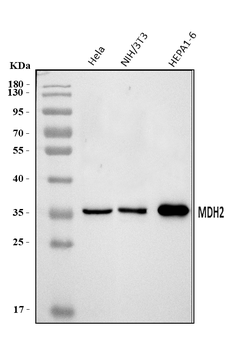
  • MDH2 Rabbit Polyclonal Antibody [orb865430]

    ELISA,  FC,  ICC,  IF,  IHC,  WB

    Human, Mouse, Rat

    Rabbit

    Polyclonal

    Unconjugated

    100 μg
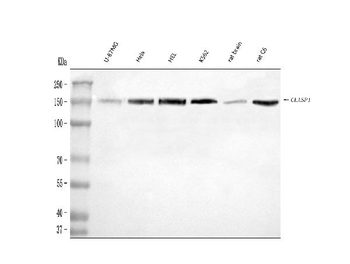
  • CLASP1 Rabbit Polyclonal Antibody [orb1184727]

    ELISA,  IF,  IHC,  WB

    Human, Rat

    Rabbit

    Polyclonal

    Unconjugated

    100 μg
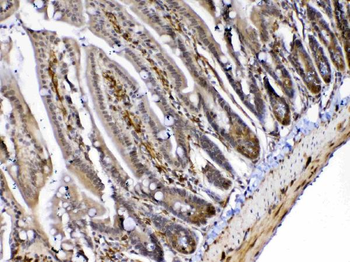
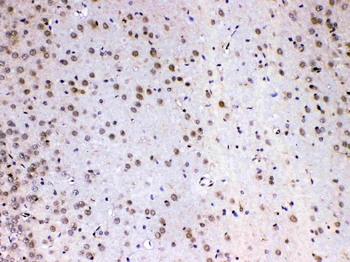
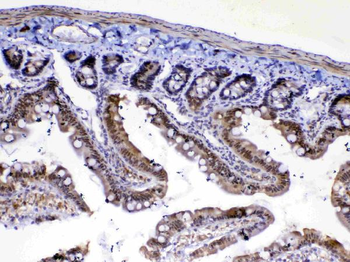
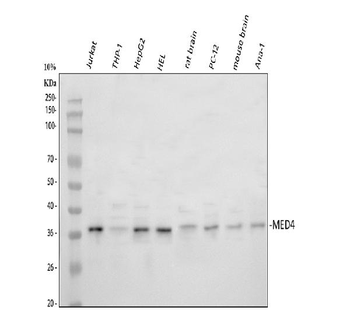
  • MED4 Rabbit Polyclonal Antibody [orb402569]

    ELISA,  IHC,  WB

    Human, Mouse, Rat

    Rabbit

    Polyclonal

    Unconjugated

    100 μg
  • VDAC3 Rabbit Polyclonal Antibody [orb669212]

    ELISA,  FC,  IHC,  WB

    Human, Mouse, Rat

    Rabbit

    Polyclonal

    Unconjugated

    100 μg
  • General 1, 25-Dihydroxyvitamin D3 (DHVD3) ELISA Kit [orb781928]

    All

    156.25-10000 pg/mL

    48.8 pg/mL

    96 T, 48 T
Quality Guarantee

Quality Guarantee

Explore bioreagents carefree to elevate your research. All our products are rigorously tested for performance. If a product does not perform as described on its datasheet, our scientific support team will provide expert troubleshooting, a prompt replacement, or a refund. For full details, please see our Terms & Conditions and Buying Guide. Contact us at [email protected].

Documents Download

Datasheet
Product Information
Download

Request a Document

Protocol Information

Vitamin D3 (orb1224266)

  • Star
  • Star
  • Star
  • Star
  • Star
  • 0.0
Based on 0 reviews

Participating in our Biorbyt product reviews program enables you to support fellow scientists by sharing your firsthand experience with our products.

Login to Submit a Review

No reviews yet

Step 1: Enter information below

(Recommended: An additional animal making an allowance for loss during the experiment)

Step 2: Enter the in vivo formulation

(This is only the calculator, not formulation. Please contact us first if there is no in vivo formulation at the solubility Section.)

% DMSO +
%+
% Tween 80 +
%

Available Sizes

Select a size below

50 mg
$ 80.00
200 mg
$ 100.00
1 g
$ 130.00
DispatchUsually dispatched within 5-10 working days
Bulk Enquiry