You have no items in your shopping cart.

Research Area
Neuroscience
Advancing global research in neurodegeneration, neurogenesis, and complex neurotransmitter signaling pathways.
The importance of clinical and foundational research in the Neuroscience area cannot be overstated. According to the World Health Organization’s last estimate, more than one billion people are directly affected by severe neurological disease globally.
Of these, over 50 million suffer with debilitating epilepsy and 24 million with Alzheimer’s and other severe dementias. Crucially, this number is strictly set to rise dramatically with an aging global population. Research into this key pathological area is therefore essential, making it a core scientific focus for Biorbyt to provide high-quality, deeply validated reagents to rigorously meet researchers' evolving needs.
Offering high-quality primary antibodies, active recombinant proteins, sensitive ELISA kits, and targeted small molecules, we actively supply products across the board to move your vital neurological research forward.
1. Neurodegeneration
Neurodegeneration is defined as the progressive structural and functional loss of neural structures and/or the localized death of neurons. Intense research is helping effectively decipher the underlying causative mechanisms of neurodegenerative diseases like ALS (MND), Alzheimer’s, Parkinson’s, and Huntington’s precisely at a subcellular level.
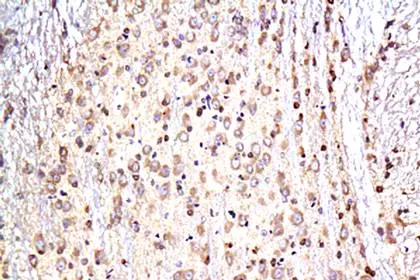
Immunohistochemical analysis of paraffin-embedded rat hippocampal tissue using Tau antibody - orb11453
| Cat. Code | Product Name |
|---|---|
| orb69429 | Apolipoprotein E (ApoE) Antibody |
Explore Related Pathways:
2. Neurogenesis
Neurogenesis encompasses the highly regulated development of functional neurons directly from undifferentiated progenitor cells into completely mature neurons within the CNS. The complex process is most heavily prolific during embryonic development, but it is now also widely known that it continues to actively occur in specific regions of the adult brain. This unique capability gives essential plasticity to the neural circuitry, and increasing clinical evidence strictly shows there is a critical role for adult neurogenesis in maintaining specific brain functions and memory formation.
3. Neural Stem Cells
Neuroepithelial cells that serve as the main functional cell type deep within the neural plate successfully constitute the major initial class of neural stem cells. They can accurately go through both asymmetric and symmetric cellular division and eventually give robust rise to radial glial cells, which later actively generate mature neurons, astrocytes, and complex oligodendrocytes.
It is also well established that the healthy adult brain uniquely contains a remarkably large number of localized stem cells. Human Embryonic stem cells (hESC) and modern induced pluripotent stem cells (iPSCs) have effectively provided a potentially unlimited therapeutic source of neural stem cells for targeted clinical use.
4. Neuronal Growth and Development
Neurons and their specific precursors routinely undergo prolific structural differentiation and precise migration directly from their original initial position heavily in the ventricular zone of the neural tube. They essentially need to migrate deliberately outwards to successfully reach their final target locations. This complex physical movement is strictly known as radial migration. Radial glial guidance is a profoundly key contributory factor heavily managing this precise process.
5. Neurotransmitter Receptors
Neurotransmitter receptors are highly specialized integral membrane proteins that specifically bind rapidly released chemical mediators strictly known as neurotransmitters. The precise binding of targeted neurotransmitters securely forms the absolute basis for lightning-fast neuronal communication heavily across the synaptic junctions found between adjacent signaling neurons. Highly complex neurotransmitter receptors are absolutely critical targets in modern clinical intervention, and the toxic loss or chronic misregulation of these specific pathways incredibly often deeply underpins the severe symptomatic onset of major neurological diseases.