Cart summary

You have no items in your shopping cart.

Phospho-Ask1 (Ser83) (G4) rabbit mAb Antibody

SKU: orb1946273

Description

Stress signaling in cells are partly mediated through c-Jun N-terminal kinase (JNK) and p38 mitogen-activated protein kinase (MAPK). A kinase upstream of these stress-mediated pathways is apoptosis signal-regulating kinase 1 (ASK1). ASK1 is a serine/threonine kinase that belongs to the family of mitogen-activated protein kinase kinase kinase (MAP3K). It is endogenously expressed in various cells. Various stress signaling activates ASK1 including reactive oxygen species (ROS), tumor necrosis factor alpha (TNFa), lipopolysaccharide (LPS) and endoplasmic reticulum (ER) stress. These events ultimately lead to the activation of JNK and p38 MAPK. As a result, ASK1-MAPK signaling is associated with various cellular stress responses including apoptosis, differentiation, and inflammation. Several studies show that aberrant ASK1 signaling leads to severe human diseases such as neurodegenerative diseases, induction of inflammatory diseases and cancer. The phosphorylation of the threonine residues 838 (Thr838) in human and Thr845 in mice is important for ASK1 activation. At basal inactive state, ASK1 is a homooligomer, which binds to another ASK1 via its C-terminal coiled-coil domain. The N-terminal coiled-coil of ASK1 binds to thioredoxin (Trx), which suppresses ASK1 kinase activity. Under oxidative stress, oxidized Trx is separated from ASK1 and unbond ASK1 is activated by phosphorylation. Calcium influx and oxidative stress can elicit phosphorylation of the ASK1. After H2O2 injury, tumor necrosis factor 2, (TRAF2) and TRAF6 act as positive regulator of ASK1. 14-3-3 proteins, act as negative regulator of ASK1 by binding to the C-terminal of ASK1 after Ser966 phosphorylation. However oxidative stress promotes dephosphorylation of Ser966 and lead to detachment of 14-3-3. TNF and Fas death receptor activate ASK1. ASK1 is an early signal stress responder to oxidative stress in cerebral ischemia. ASK1 has also been implicated in thrombosis, brain edema, inflammatory response, and reactive gliosis.

Images & Validation

Tested ApplicationsFC, WB
Dilution range1µg/mL - 0.001µg/mL. It is recommended that the reagent be titrated for optimal performance for each application. See product image legends for additional information.
ReactivityHuman, Mouse, Rat

Key Properties

HostRabbit
ClonalityMonoclonal
IsotypeRabbit IgG1k
Clone No.Ask1S83-G4
ImmunogenA synthetic phospho-peptide corresponding to residues surrounding Ser83 of human phospho Ask1
PurificationProtein A+G
ConjugationUnconjugated

Storage & Handling

StorageMaintain refrigerated at 2-8°C for up to 2 weeks. For long term storage store at -20°C in small aliquots to prevent freeze-thaw cycles.
Form/AppearanceLiquid
Buffer/Preservatives1X PBS, 0.02% NaN3, 50% Glycerol, 0.1% rAlbumin
Concentration0.5 mg/mL
DisclaimerFor research use only

Alternative Names

Apoptosis signal-regulating kinase 1, Mitogen-activated protein kinase kinase kinase 5, MAPK/ERK kinase kinase 5, MAP3K5, MAPKKK5, MEKK5

Similar Products

Quality Guarantee

Quality Guarantee

Explore bioreagents carefree to elevate your research. All our products are rigorously tested for performance. If a product does not perform as described on its datasheet, our scientific support team will provide expert troubleshooting, a prompt replacement, or a refund. For full details, please see our Terms & Conditions and Buying Guide. Contact us at [email protected].

Phospho-Ask1 (Ser83) (G4) rabbit mAb Antibody

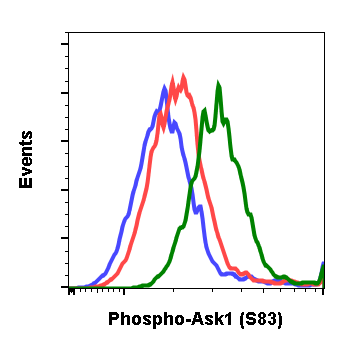
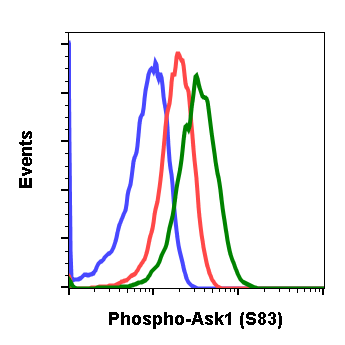
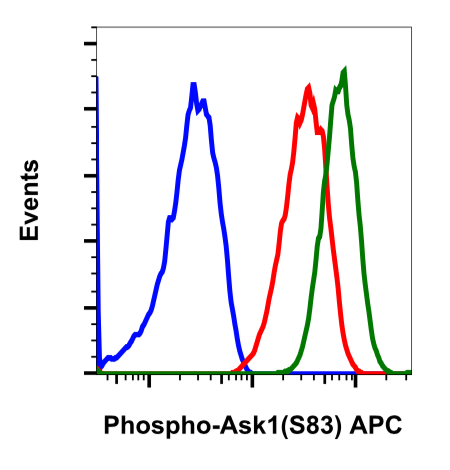
Flow cytometric analysis of K562 cells secondary antibody only negative control (blue) or treated with imatinib (red) or with IFNα + IL-4 + pervanadate (green) using Phospho-Ask1 (Ser83) antibody Ask1S83-G4 at 5ng/mL. Cat. #orb1946273.

Phospho-Ask1 (Ser83) (G4) rabbit mAb Antibody

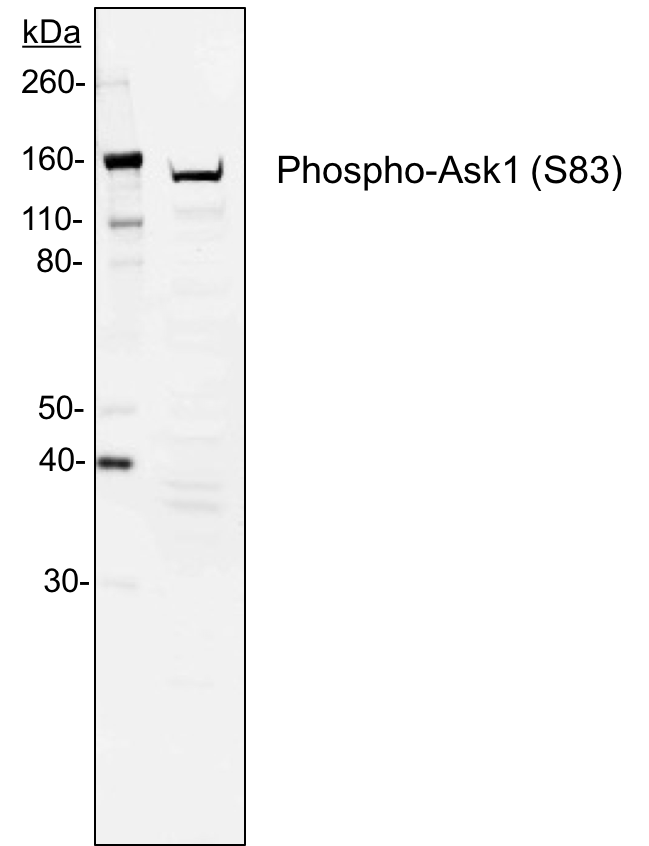
Western blot analysis of L929 cell extract treated with 20% FBS using Phospho-Ask1 (Ser83) antibody Ask1S83-G4 at 0.01μg/mL. Cat. #orb1946273.

Phospho-Ask1 (Ser83) (G4) rabbit mAb Antibody

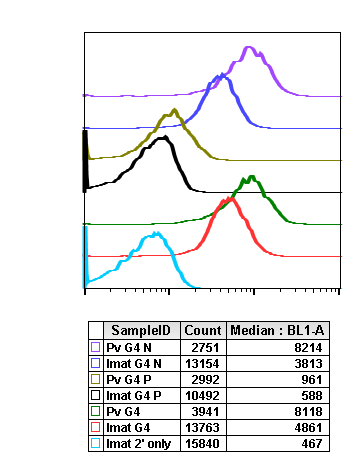
Peptide blocking flow cytometric analysis of C6 cells secondary antibody only negative control (light blue) or imatinib-treated (red) or pervandadate-treated (green) or imatinib and blocked with phospho-peptide (black) or pervanadate and blocked with phospho peptide (gold) or imatinib and blocked with non-phospho peptide (dark blue) or pervanadate and blocked with non-phospho peptide (purple) using Phospho-Ask1 (Ser83) antibody Ask1S83-G4 at 1ng/mL. Cat. #orb1946273.

Phospho-Ask1 (Ser83) (G4) rabbit mAb Antibody

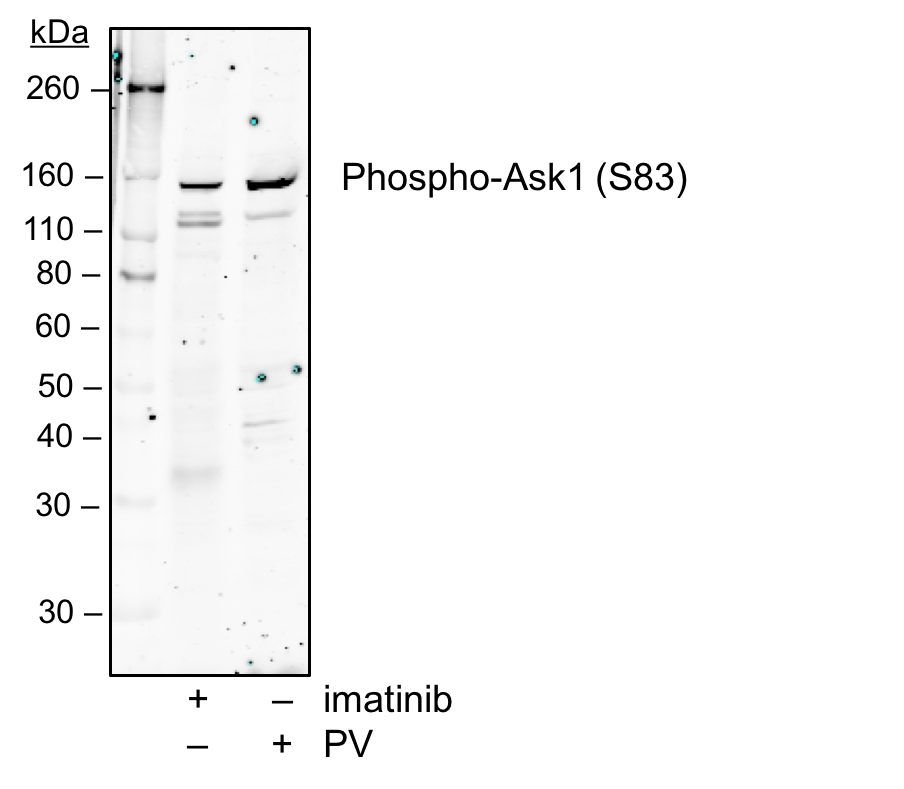
Western blot analysis of C6 cell extract treated with imatinib or treated with PV using Phospho-Ask1 (Ser83) antibody at 0.01 μg/mL. Ask1S83-G4. Cat. #orb1946273.

Phospho-Ask1 (Ser83) (G4) rabbit mAb Antibody

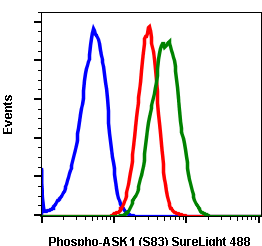
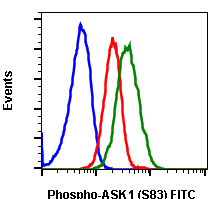
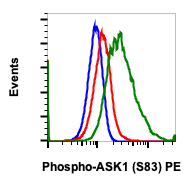
Flow cytometric analysis of C6 cells secondary antibody only negative control (blue) or treated with imatinib (red) or with pervanadate (green) using Phospho-Ask1 (Ser83) antibody Ask1S83-G4 at 1ng/mL. Cat. #orb1946273.

Phospho-Ask1 (Ser83) (G4) rabbit mAb Antibody

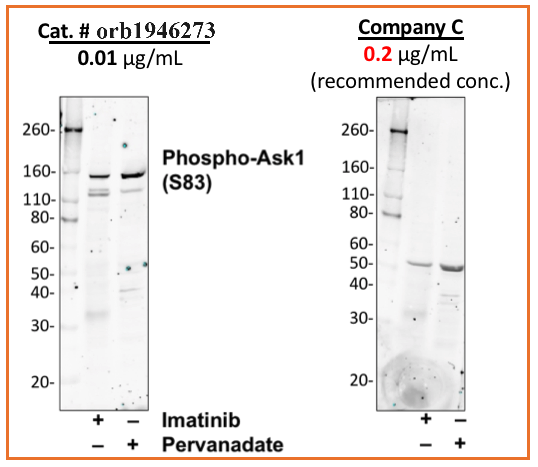
Western blot analysis of C6 cell extract treated with imatinib or with pervanadate using 0.01 μg/mL Phospho-Ask1 (Ser83) antibody Ask1S83-G4 Cat. #orb1946273 or Company C antibody at 0.2 μg/mL (manufacturer's recommended concentration) developed using the same exposure.

UniProt Details

No UniProt data available

Documents Download

Datasheet
Product Information
Download

Request a Document

Protocol Information

WB
Western Blot (IB, immunoblot)
View Protocol
FC
Flow Cytometry
View Protocol

Phospho-Ask1 (Ser83) (G4) rabbit mAb Antibody (orb1946273)

  • Star
  • Star
  • Star
  • Star
  • Star
  • 0.0
Based on 0 reviews

Participating in our Biorbyt product reviews program enables you to support fellow scientists by sharing your firsthand experience with our products.

Login to Submit a Review

No reviews yet

Available Sizes

Select a size below

20 μl
$ 370.00
200 μl
$ 910.00
DispatchUsually dispatched within 5-10 working days
Bulk Enquiry