
You have no items in your shopping cart.
Human AEBP1 ELISA Kit
SKU: orb437774
Featured
Description
Research Area
Cancer Biology
Images & Validation
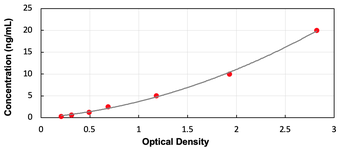
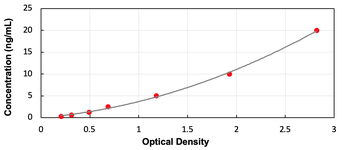
−
Item 1 of 1
Key Properties
−| Reactivity | Human |
|---|---|
| Sample Types | tissue homogenates, cell lysates and other biological fluids |
| Assay Type | Sandwich |
| Assay Time | 4.5 hours |
| Range | 0.312-20 ng/mL |
| Sensitivity | 0.126 ng/mL |
Customer Validated Data
− The data below is submitted by researchers worldwide. We provide this transparency to help you decide if this product works for your specific application or species, even if we haven't tested it ourselves.
Success by Application
Reactivity Distribution
Latest Experiments
1 ResultsDilution
Sample
Summary
ELISA
Human
-
Human cardiac fibroblast culture supernatant; mouse serum
AEBP1 levels were measured with the...
Storage & Handling
−| Storage | TMB Substrate, Wash Buffer, Stop Solution at 4°C, all others at -20°C |
|---|---|
| Expiration Date | Please enquire. |
| Disclaimer | For research use only |
Alternative Names
−ACLP; Aortic Carboxypeptidase-Like Protein; Adipocyte Enhancer Binding Protein 1
Similar Products
−
- Item 1 of 1
Human AEBP1/Adipocyte enhancer-binding protein 1 ELISA Kit [orb1661386]
Human
78-5000pg/mL
42.3pg/mL
96 T

Quality Guarantee
Explore bioreagents carefree to elevate your research. All our products are rigorously tested for performance. If a product does not perform as described on its datasheet, our scientific support team will provide expert troubleshooting, a prompt replacement, or a refund. For full details, please see our Terms & Conditions and Buying Guide. Contact us at support@biorbyt.com.
Protocol Information
Filter by Applications
Filter by Species
Stavros Drakos, Thirupura Sundari Shankar, Joseph Visker, Junedh Amrute, and 15 more Adipocyte Enhancer Binding Protein 1 (AEBP1) Inhibition as a Potential Anti-Fibrotic Therapy in Heart Failure. Research Square, (2023)
Applications
ELISA
Reactivity
Human
Thirupura S. Shankar, Ezra Johnson, Rana Hamouche, Joseph R. Visker, Jing Ling, Junedh Amrute, Laisha Padilla, Harini Srinivasan, Dallen Calder, Georgiy Polishchuk, Ty Lunde, James Jeong, Bassel Tekarli, Konstantinos Sideris, Ioannis Kyriakoulis, Sutip Navankasattusas, Frank B. Sachse, Sihem Boudina, Craig H. Selzman, Dipayan Chaudhuri, Thomas Seidel, Kory J. Lavine, Matthew D. Layne, Eleni Tseliou, Stavros G. Drakos Adipocyte enhancer binding protein 1 (AEBP1) inhibition mediates cardiac reverse remodeling by regulating MRTFB and RUNX2 signaling Nat Commun, (2026)
Applications
ELISA
Reactivity
Human
Available Sizes
Select a size below
 Usually dispatched within 5-10 working days