
You have no items in your shopping cart.
Translational Cardiology & Biomarkers
NT-proBNP Research Toolkit
Comprehensive reagents for translational heart failure models, complex assay validation, and high-throughput in vitro cardiotoxicity screening.
1. The Biochemistry of Natriuretic Peptides
N-terminal pro-brain natriuretic peptide (NT-proBNP) is an inactive 76-amino acid peptide that is co-secreted with biologically active B-type natriuretic peptide (BNP) in response to cardiomyocyte stretch, volumetric overload, and increased ventricular wall tension.
Following the translation of the NPPB gene, the preproBNP precursor is synthesized and cleaved into the 108-amino acid proBNP. Upon secretion, primarily by proprotein convertases like Furin and Corin, proBNP is cleaved into the active 32-amino acid BNP and the biologically inert 76-amino acid NT-proBNP fragment.
For biobanking and prolonged in vitro assays, NT-proBNP is heavily preferred over BNP. While BNP has an in vivo half-life of approximately 20 minutes and degrades rapidly in standard collection tubes, NT-proBNP possesses an extended half-life of roughly 120 minutes, offering far superior analytical stability for batched experimental research.
2. Overcoming O-Glycosylation & Matrix Effects
A major defining characteristic of the current scientific landscape is the critical scrutiny of immunoassay mechanics. It is now well-established that a significant proportion (often cited up to 80% in severe heart failure) of circulating NT-proBNP is heavily O-glycosylated in its central region (amino acids 28–50).
The Epitope Masking Problem: Central-region glycosylation restricts antibody binding, causing commercial ELISA kits relying on these epitopes to systematically underestimate true NT-proBNP concentrations. Researchers investigating mechanistic cardiotoxicity must select assays and antibodies meticulously mapped to O-glycan-free regions (e.g., the extreme N-terminus aa 1–21 or C-terminus aa 63–76) to bypass the masking effect.
Assay Validation Challenges: When measuring NT-proBNP in complex, non-clinical matrices like human induced pluripotent stem cell-derived cardiomyocyte (hiPSC-CM) supernatants, researchers face significant pre-analytical matrix effects. Constructing accurate standard curves requires overcoming endogenous baseline interference—making tools like true NT-proBNP Free Plasma indispensable for establishing a valid Limit of Blank (LoB).
3. Biomarker Toolkit for Translational Models
Moving from high-throughput in vitro screens to complex in vivo models requires reliable, species-specific biomarker readouts that accurately correlate with human clinical pathology. Explore our tailored ELISA portfolio for your specific cardiovascular disease model below.
Small Animal Models
Ideal for surgical pressure-overload models like Transverse Aortic Constriction (TAC) or Myocardial Infarction (MI). Biorbyt provides highly sensitive ELISAs for Mouse, Rat, and Rabbit models to track longitudinal cardiac remodeling.
Large Animal Models
Essential for testing mechanical circulatory support devices and advanced pharmacotherapies. We offer validated biomarker kits for Pig, Dog, Sheep, and Cattle models.
High-Throughput & NHP
For large-scale cardiotoxicity drug screening and developmental biology, utilize our Zebrafish NT-proBNP ELISA to quantify teleost natriuretic peptide orthologs. For late-stage pre-clinical translational safety, utilize the Simian specific kit.
Mechanistic & Validation Tools
Go beyond secretion analysis with NPPB Antibodies for immunohistochemistry and Western Blot, or utilize Recombinant proBNP as an enzymatic substrate for cleavage studies.
4. Featured Research Reagents
Biorbyt provides a comprehensive cardiovascular biomarker portfolio, including species-specific ELISAs, validation matrices, and structural proteins for custom assay development.
| Image | Product Details | Application & Reactivity |
|---|---|---|
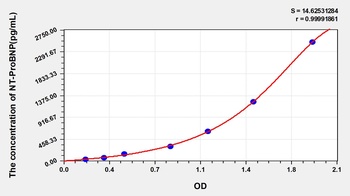
|
Human NT-proBNP ELISA Kit
SKU: orb775077
Highly sensitive sandwich ELISA optimized for cell culture supernatants, lysates, and plasma in human translational models. |
Applications: ELISA
Reactivity: Human |
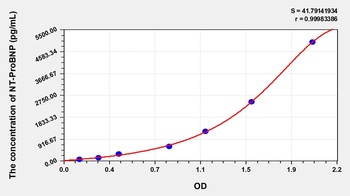
|
Mouse NT-proBNP ELISA Kit
SKU: orb779298
Accurately tracks biomarker secretion in murine Transverse Aortic Constriction (TAC) and Myocardial Infarction models. |
Applications: ELISA
Reactivity: Mouse |
|
BNP and NT-proBNP Free Plasma
SKU: orb1571091
The essential biological matrix for CLSI/FDA compliant assay validation, enabling accurate spike-and-recovery calculations. |
Applications: Assay Validation, Diluent
Reactivity: Human (Matrix) |
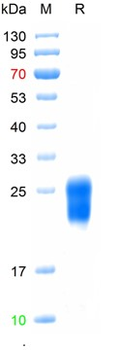
|
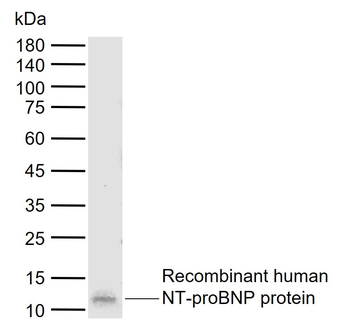
Recombinant Human proBNP Protein
SKU: orb1516611
Uncleaved proBNP precursor ideal as a substrate to study Furin/Corin cleavage efficiency and the regulatory, inhibitory effects of Thr71 O-glycosylation. |
Applications: WB, Control, Assay Standard
Reactivity: Human |
|
NT-proBNP/NPPB Mouse Monoclonal Antibody
SKU: orb1596194
Highly specific monoclonal antibody designed for detecting intracellular NPPB translation and tissue localization. |
Applications: IHC, WB, ELISA
Reactivity: Human, Mouse |
5. Custom Antibody & Protein Services
Developing a novel multiplex cardiotoxicity panel or struggling to source a unique cleavage-specific antibody? Biorbyt provides tailored contract research services to overcome assay development bottlenecks.
- Custom Nanobody Development Service: Single-domain antibody (VHH) development from immunized camelids, perfect for penetrating dense tissue sections or identifying cryptic epitopes shielded by glycosylation.
- Custom Protein Expression: High-yield preparation of structural cardiovascular proteins, precursor substrates, and complex enzymatic complexes using mammalian (HEK293/CHO) or insect cell lines to ensure accurate post-translational modifications.
- Recombinant Antibodies: Convert existing hybridoma clones to completely sequence-defined custom recombinant antibodies for guaranteed lot-to-lot reproducibility in long-term longitudinal studies.
Need custom assay building blocks?
Reach out to Biorbyt’s scientific support team to discuss custom synthesis, specialized nanobody development, or recombinant protein expression to accelerate your cardiovascular project.
Contact Technical Support6. Frequently Asked Questions
Why choose NT-proBNP over BNP for in vitro experiments?
While BNP is the biologically active hormone, it has an in vivo half-life of only ~20 minutes and degrades extremely rapidly in unpreserved samples. NT-proBNP has a much longer half-life (~120 minutes) and superior ex vivo stability, making it the preferred and more reliable target for batched analysis and prolonged biobanking.
How does O-glycosylation impact NT-proBNP ELISA results?
The central region of circulating NT-proBNP is heavily O-glycosylated, which physically blocks antibodies from binding to epitopes in this region. Commercial assays that do not account for this masking effect often underestimate the true concentration of NT-proBNP. Researchers should select assays mapped to the glycan-free N-terminal or C-terminal ends for optimal accuracy.
Why is NT-proBNP Free Plasma necessary for assay validation?
Standard biological matrices, like healthy donor plasma, contain endogenous baseline levels of NT-proBNP. When performing spike-and-recovery experiments to validate an assay (per CLSI/FDA guidelines), this baseline skews the limit of blank (LoB). Using verified NT-proBNP Free Plasma removes endogenous baseline interference, allowing for mathematically accurate analytical validation.
Which animal model is best for cardiotoxicity screening?
The choice depends on the research phase. Zebrafish models are increasingly adopted for high-throughput, early-stage drug toxicity screening due to their scalability. Murine (mouse/rat) models are the standard for surgical pressure-overload (TAC), while large animals (pig, dog) are required for late-stage physiological and mechanical support device testing.
7. References
- Semenov, A.G. et al. (2010). "Processing of Pro-B-Type Natriuretic Peptide: Furin and Corin as Candidate Enzymes." Clinical Chemistry, 63(3), 675–684.
- Nishikimi, T. et al. (2012). "The effect of glycosylation on plasma N-terminal proBNP-76 levels in patients with heart or renal failure." Heart, 98(2), 152–161.
- Røsjø, H. et al. (2015). "Diagnostic utility of a novel O-glycosylation-independent NT-proBNP assay." Clinica Chimica Acta, 451, 237–242.
- Clinical and Laboratory Standards Institute (CLSI) & FDA Guidance (2018). "Bioanalytical Method Validation."
- Houser, S. R., et al. (2012). "Animal models of heart failure: A scientific statement from the American Heart Association." Circulation Research, 111(1), 131-150.